

This month’s economic readings reinforced expectations that the Fed will deliver another rate hike at this week’s FOMC meeting and pushed the expected policy path higher. Markets are now pricing nearly four rate hikes through 2027, among the highest tightening expectations seen in years.
Concerns around persistent deficits, rising debt-service costs, and heavy Treasury issuance have driven long-term yields higher as investors demand greater compensation to own government debt. However, the onset of Fed rate hikes could support relative outperformance at the long end. Previous hiking cycles have frequently coincided with a flatter yield curve as short-term yields tend to rise alongside policy expectations, while longer-term yields often move less as markets begin looking beyond the next rate hike toward the eventual impact on growth and inflation.
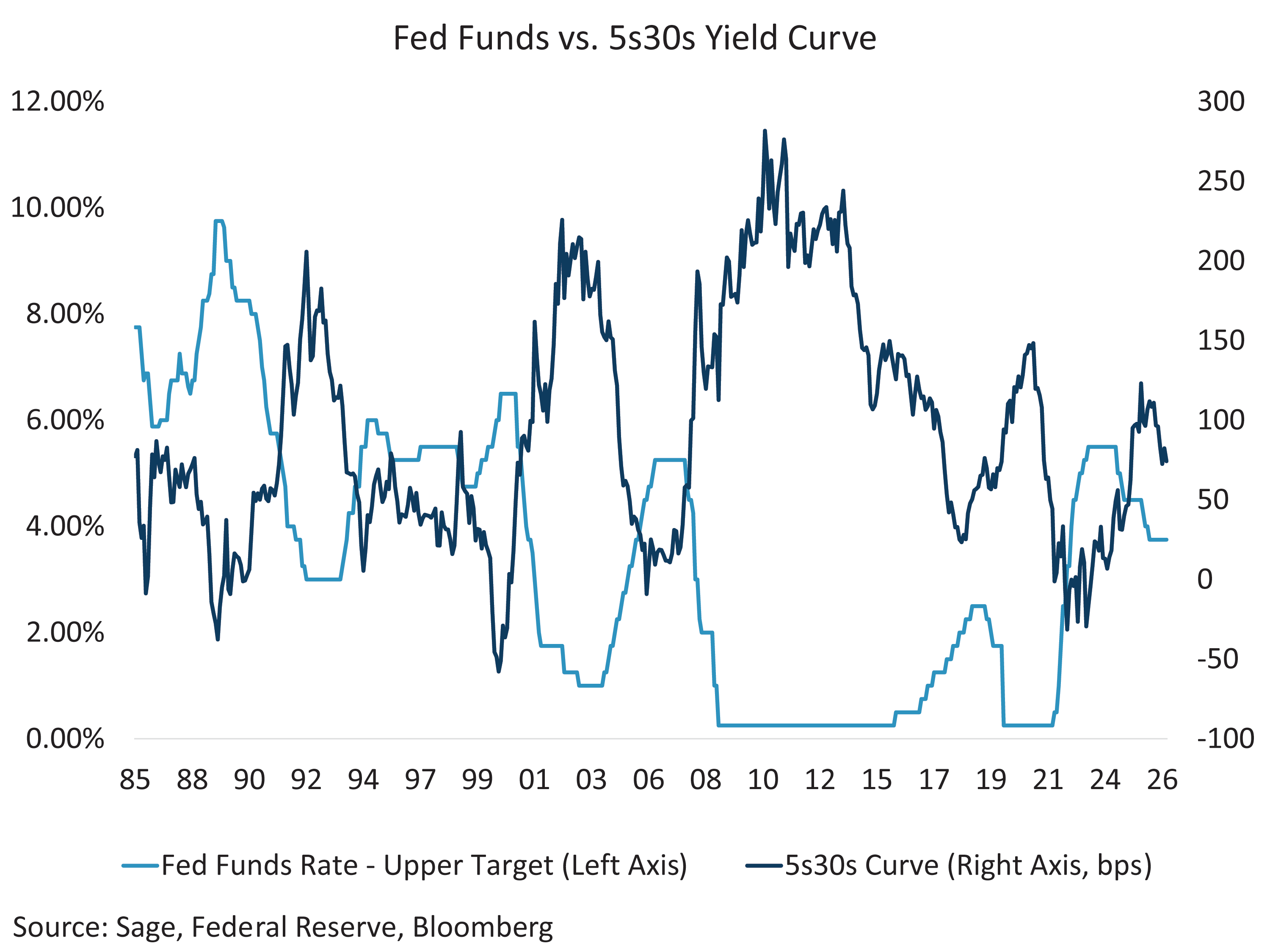
The key wildcard remains energy, both in markets and politics, as well as the broader inflation path. Fuel prices have resumed their ascent in recent months, with diesel reaching new highs. There is a risk that higher transportation and logistics costs could filter through supply chains, placing upward pressure on inflation. At the same time, if the inflation pressures this year stay isolated to one-time shocks, such as energy, the role of base effects could come into play next year. Even if monthly inflation prints remain elevated, higher base effects could produce noticeably lower year-over-year CPI readings six months from now, helping to ease some concerns around the long-term inflation outlook.
Policy expectations can shift far more quickly than the market anticipates. This week’s meeting may bring rates another step higher, but the outlook one year from now will depend less on where inflation is today and more on whether today’s pressures prove persistent. If energy-driven inflation fades and base effects begin to weigh on year-over-year readings, the Fed could find itself discussing a much different set of risks by this time next year than the ones currently reflected in market pricing.