
Labor market data was soft enough to cast doubt on the timing and magnitude of future Fed hikes, making the upcoming CPI release a key tiebreaker for a September rate decision.
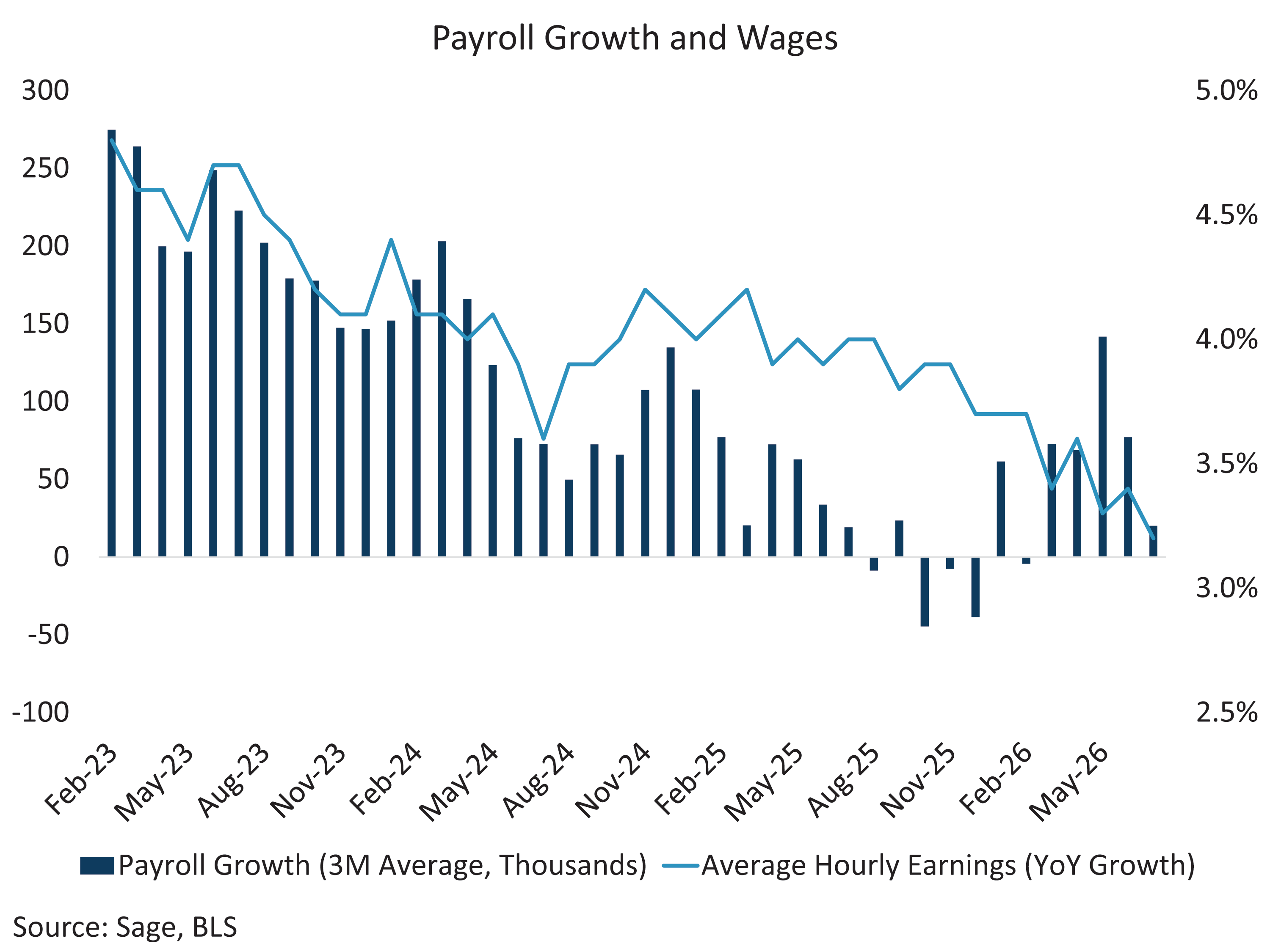
Nonfarm payrolls decreased by 23k in July, far below expectations and a sharp departure from the strong job growth seen in recent months. The bulk of the decrease was in leisure and hospitality (-40k) and local government/education (-50k). Additionally, the prior two months’ payroll growth were revised lower to 20k and 63k, respectively, and brings the 3-month average payroll growth to a paltry 20k. Wage growth was also soft, increasing 0.05% on the month which leaves the year-over-year growth lower at 3.15%.
Markets viewed a September rate hike as nearly certain just one month ago. The labor market report, however, reopened the debate by raising concerns about a softening economy and changing the risk-reward tradeoff of immediate Fed action, particularly as uncertainty around energy prices and the Strait of Hormuz persists. Rate hike odds for the September meeting dropped to 47% (SOFR) and 37% on prediction markets.
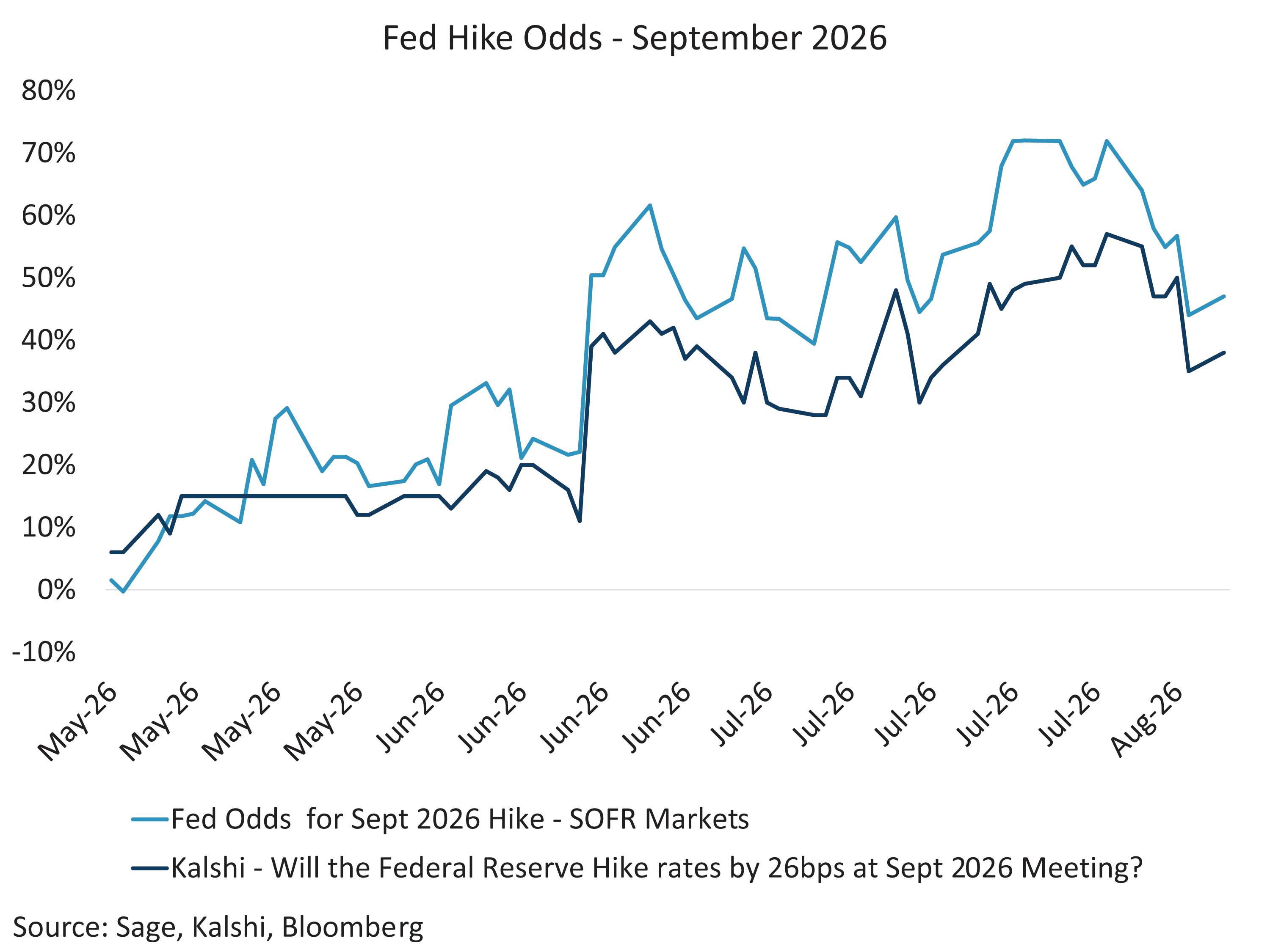
With the Fed September hike effectively a coin flip, inflation data this month will be especially important going into Jackson Hole. While the theme of the symposium (“Financial Innovation: Implications for Payments and Policy”) doesn’t foreshadow a large shift in monetary policy, the event will provide a high-profile forum for Warsh and other policymakers to shed light on upcoming Fed policy and their evaluation of recent data releases. In a “no forward guidance” environment, even unintended signals could prove meaningful.
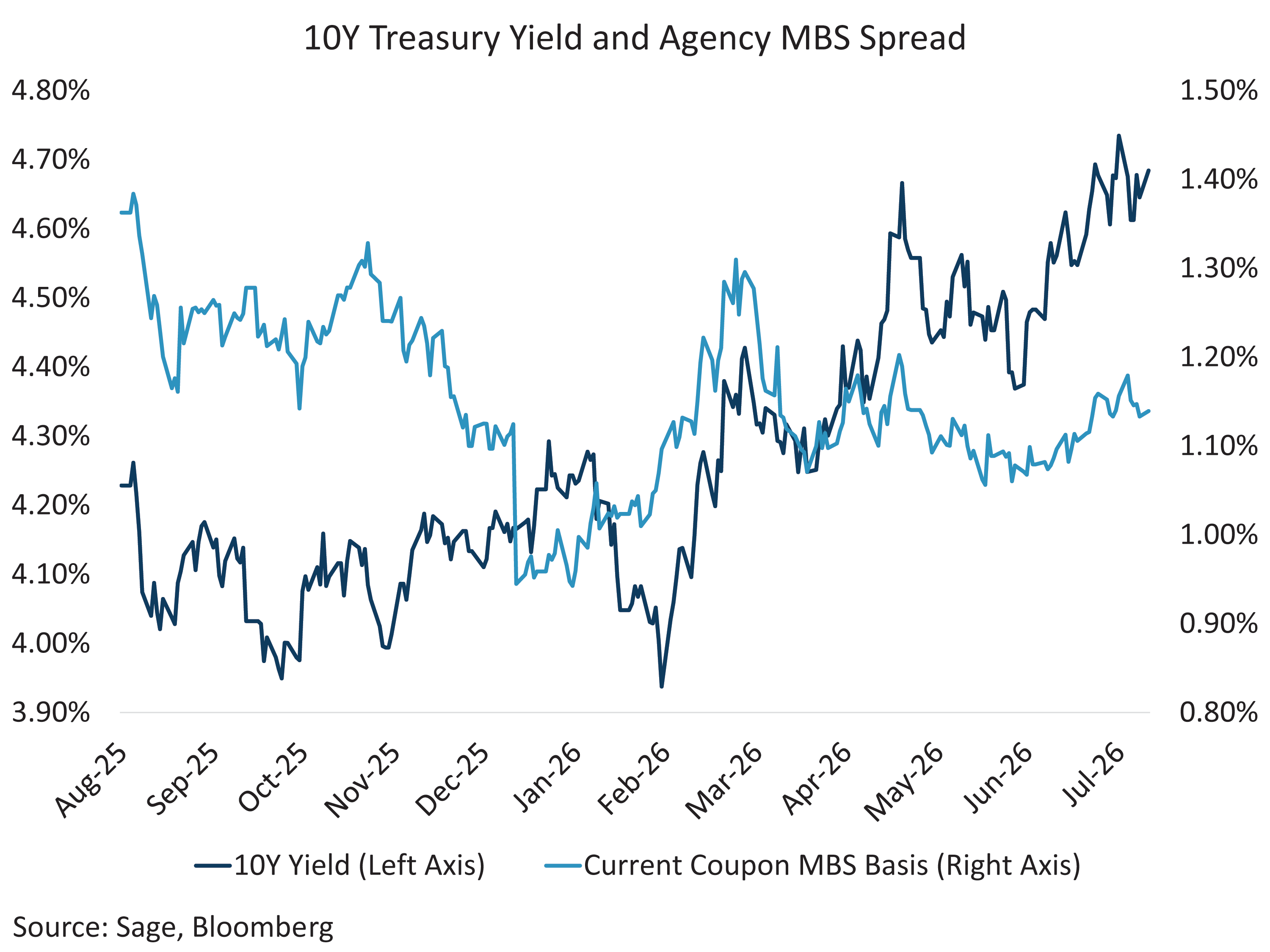
Looking outside of the immediate front end of the yield curve, long-term interest rates remain elevated. We believe this is warranted given the risk premium around energy prices, fiscal risk, as well as the new Fed policy regime under Warsh. Nonetheless, the recent increase in yields represents repricing to a higher “rangebound” setting, rather than runaway increasing rates. Notably, agency MBS spreads, of which we’ve written extensively, have remained resilient in the face of recent volatility and rising yields. We continue to believe this sector offers some of the most favorable yield pickup in the IG bond markets.