
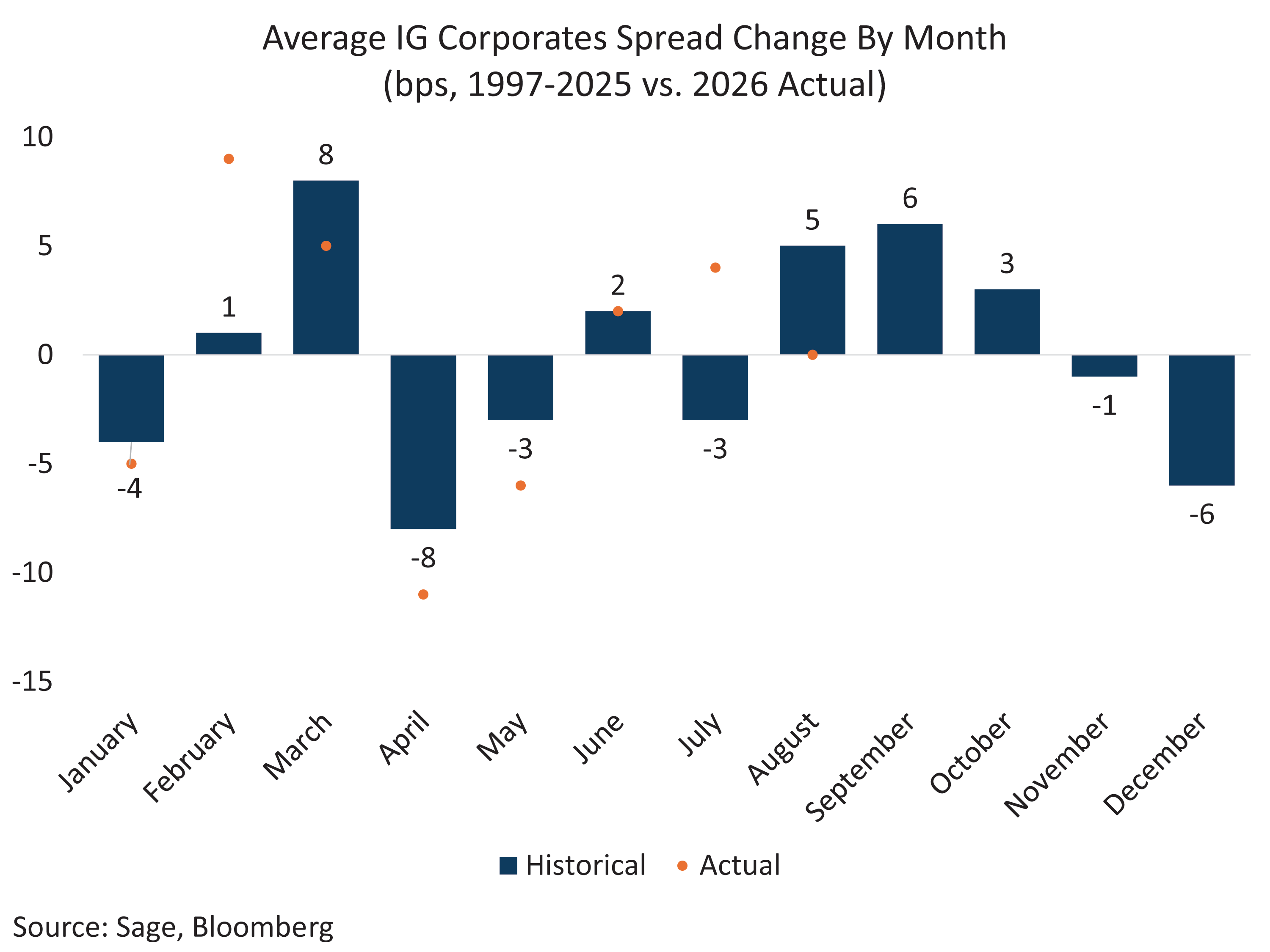
Credit markets continue to defy both seasonal patterns and macro uncertainty. Historically, August and September rank among the weakest months of the year for investment grade spreads, yet IG spreads were essentially unchanged in August despite lingering questions around AI funding, geopolitical tensions in the Middle East, and a hawkish Fed shift.
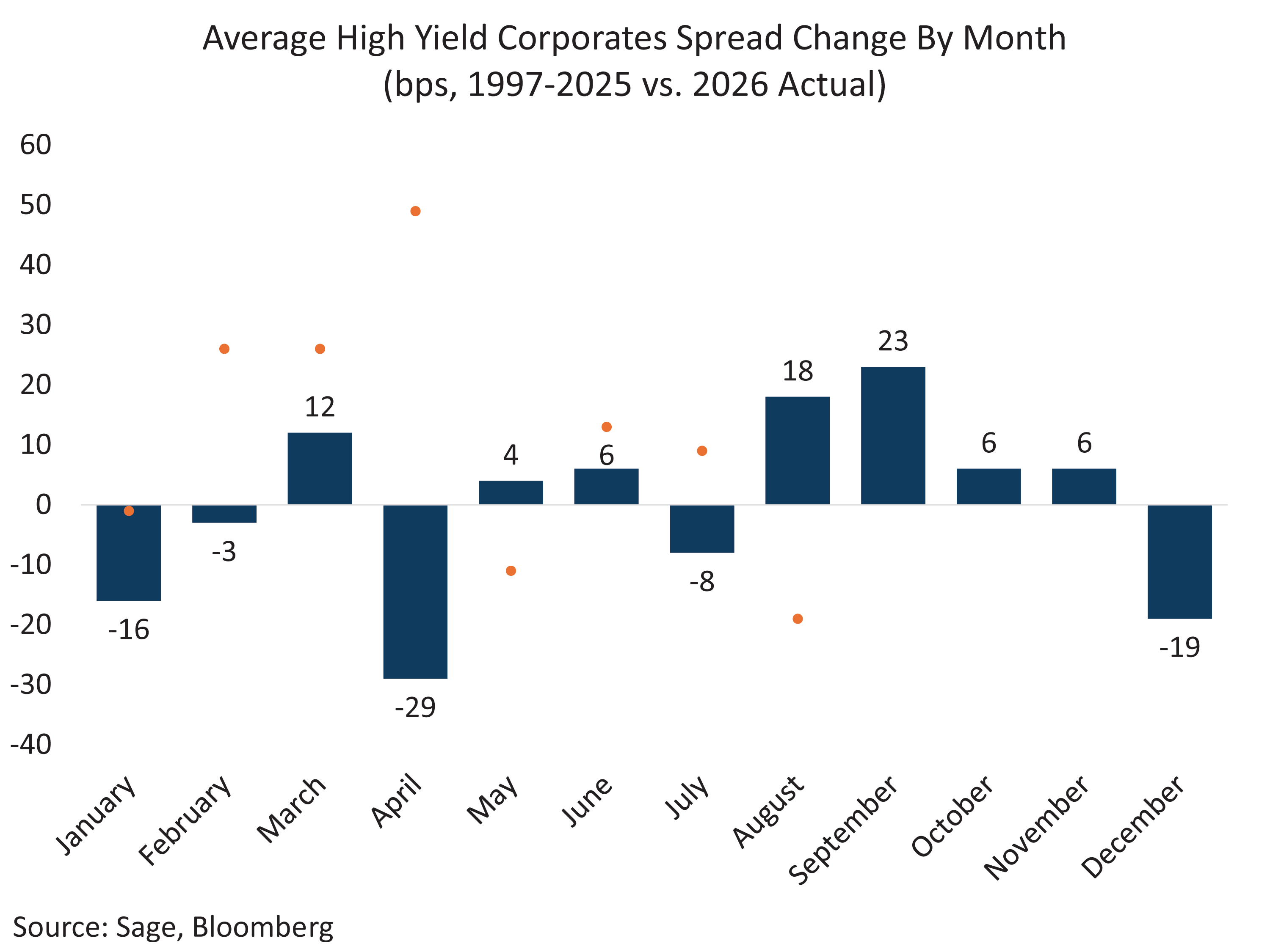
High yield corporate spreads tightened 19 basis points during August, making it the sector’s strongest month of the year despite what has historically been the second-worst month. The strong US corporate earnings reports this quarter have helped offset those concerns, leaving spreads remarkably resilient at already tight levels.
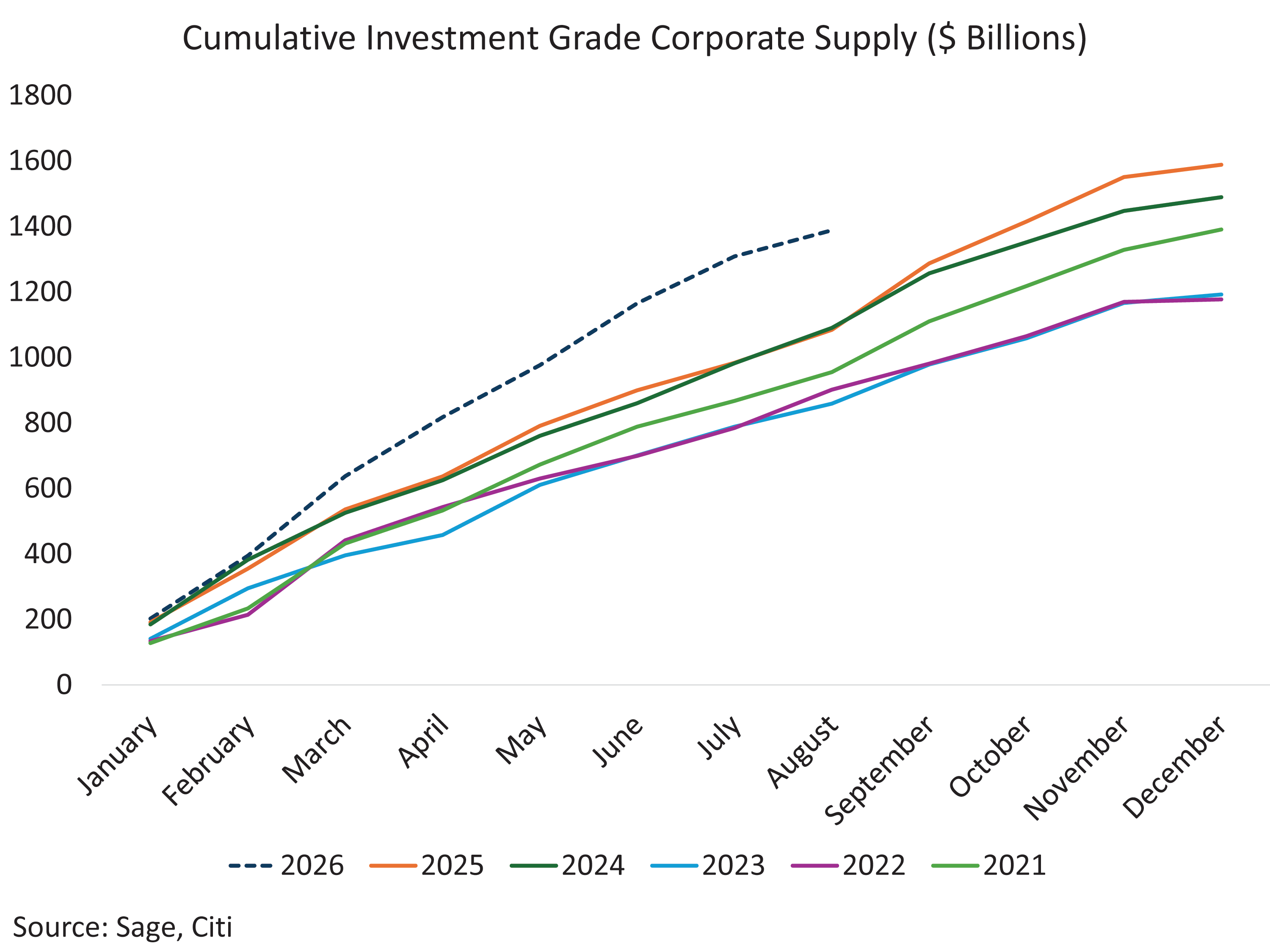
This strength is occurring in a backdrop of massive corporate bond supply, particularly in the investment grade market.
IG corporate bond supply has surged to a record $1.4 trillion year-to-date, fueled in large part by debt-financed AI-related capital spending. Ordinarily, such a flood of supply would place upward pressure on spreads and long-term yields. Instead, the Treasury’s recent efforts to suppress long-end rates through enhanced buybacks have helped absorb part of that pressure.
At Jackson Hole, Fed Chair Kevin Warsh delivered an unequivocally hawkish message, emphasizing that the Fed’s 2% PCE inflation objective remains a “firm, fixed target.” With headline PCE running at 3.7% year-over-year and core PCE at 3.3%, markets responded by sharply increasing the probability of a September rate hike. Fed funds futures now imply a much greater likelihood of additional tightening.
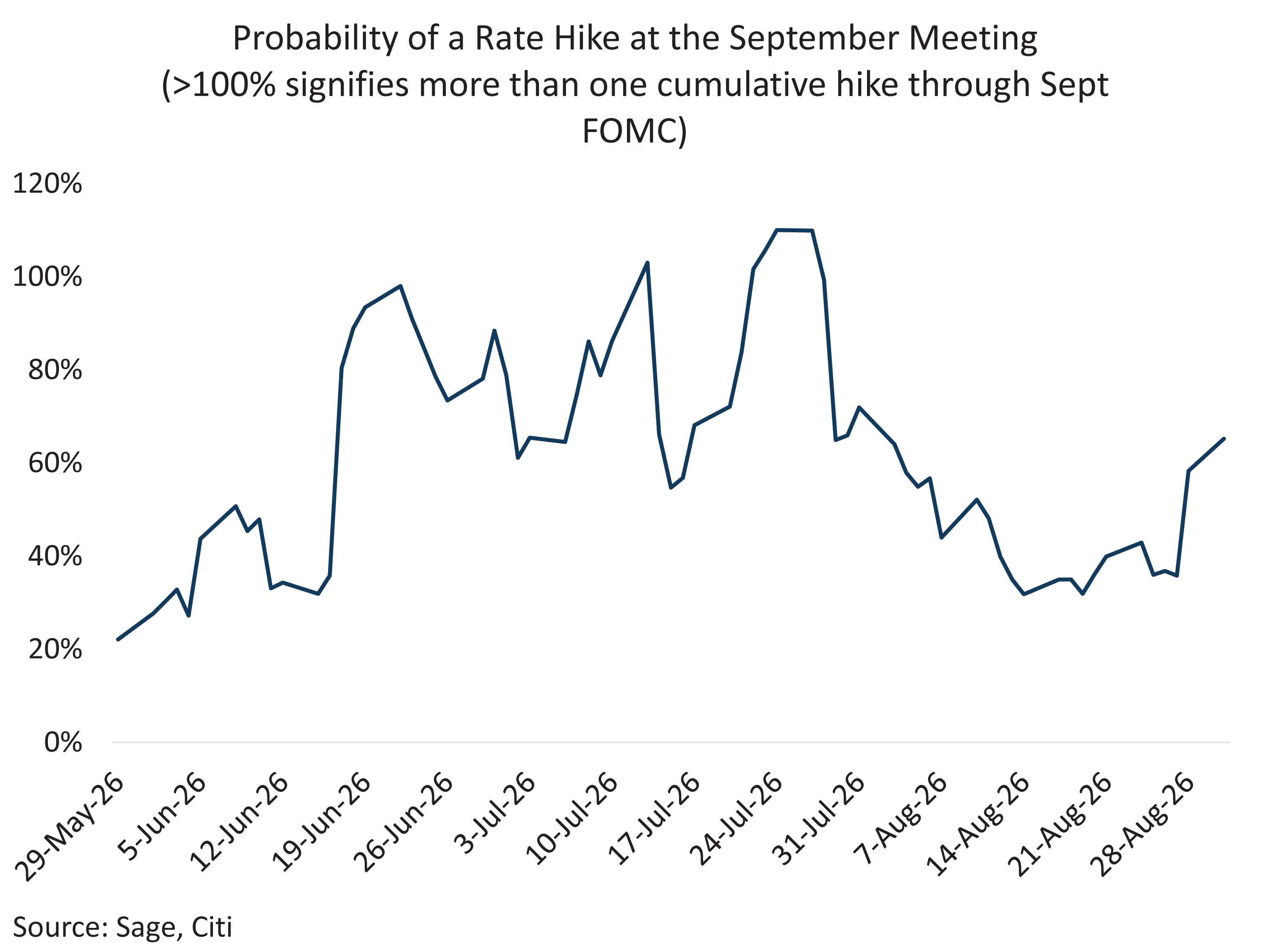
While rates markets are repricing for a potentially more restrictive policy path, spread markets continue to reflect a near-perfect economic outcome. That disconnect leaves credit heavily dependent on continued earnings strength and firm investor demand, leaving little room for spreads to absorb external shocks.