

Strong fundamentals and healthy demand may not be enough to bring spreads back to the tights.
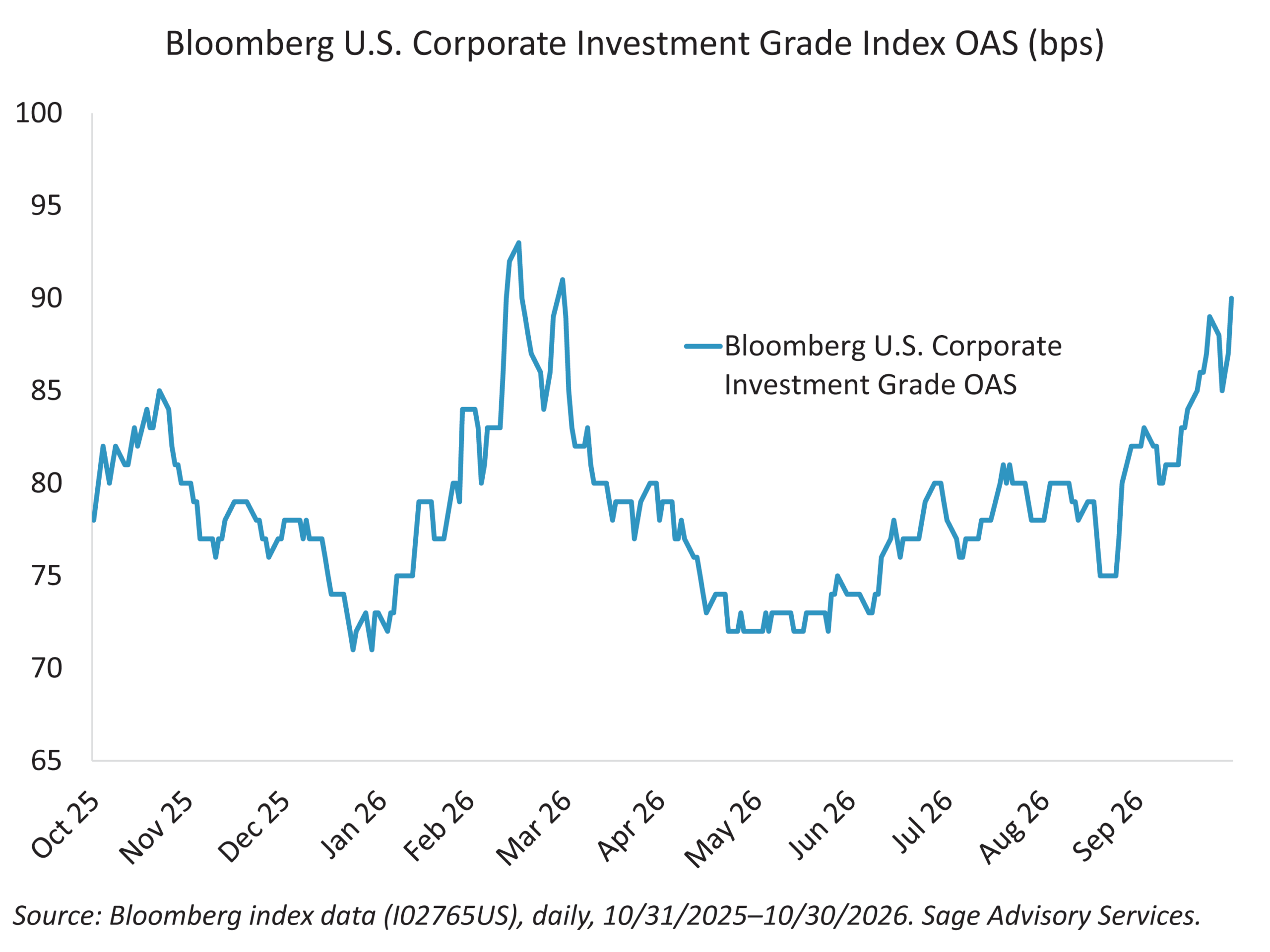
Investment grade spreads are heading into year-end near the wider end of their 2026 range, despite little deterioration in credit fundamentals. The better explanation is supply, and dealer forecasts suggest there will be plenty more of it in 2027.
There is little in the fundamentals to explain wider spreads. With 91% of the S&P 500 reported, Q3 earnings are up 31.9% from a year ago and 84% of companies have beaten estimates. Ratings upgrades continue to outpace downgrades, while a sizable share of the IG universe remains on positive outlook or watch. The market has gone the other way. The Bloomberg U.S. Corporate Investment Grade Index OAS closed at 91 bps on November 17, just shy of the year’s 93 bps wide and 20 bps above the January tight. All-in yields have repriced even more. The index now yields 5.99%, up from 4.81% at the end of 2025.
More Debt, Wider Spreads
Technology and the AI build-out sit at the center of the supply story. IG issuance is on pace to reach roughly $2 trillion in 2026, with dealers expecting another record in 2027. Much of that growth is coming from tech. Issuance from the sector jumped 77% this year, and some dealers expect another 54% increase next year.
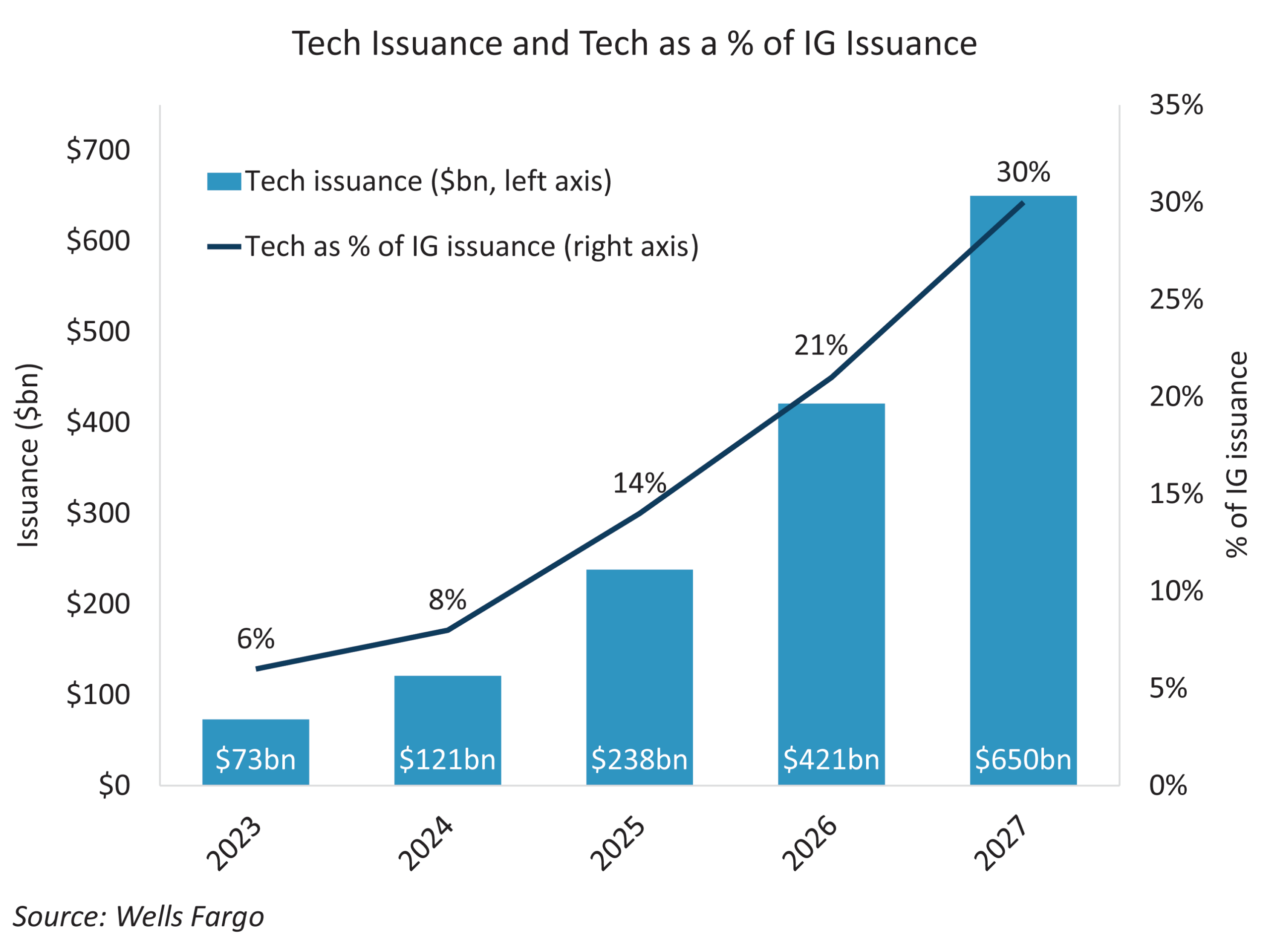
Investors are already demanding more spread to absorb it. Tech has been one of the weaker parts of IG this year, with spreads near their 2026 wides and 33 bps off the tights. That matters beyond the sector itself. As tech cheapens, other sectors may eventually have to follow simply to remain competitive on relative value.
Strong Demand, But Supply Sets the Price
The supply wave shows little sign of slowing down in 2027. Demand, however, remains healthy. Investment grade funds have taken in $372.6 billion through November 14, helped by solid fundamentals and yields near 6%. That should provide a floor for the market, not necessarily a catalyst for tighter spreads. With AI capex continuing to pull financing into the bond market, investors have plenty of new paper to choose from. That keeps the balance of power with buyers and makes a return to the tights of early 2026 difficult to see.