

The rise in yields over the past several weeks has revived memories of 2022, when fixed income investors faced the painful combination of near-zero starting yields and rapidly repricing interest rate expectations. The starting point today is far more favorable. Four years ago, bonds entered the tightening cycle offering very little income to offset price declines. Today, investors start from a much different position, with yields across much of the fixed income market several percentage points higher.
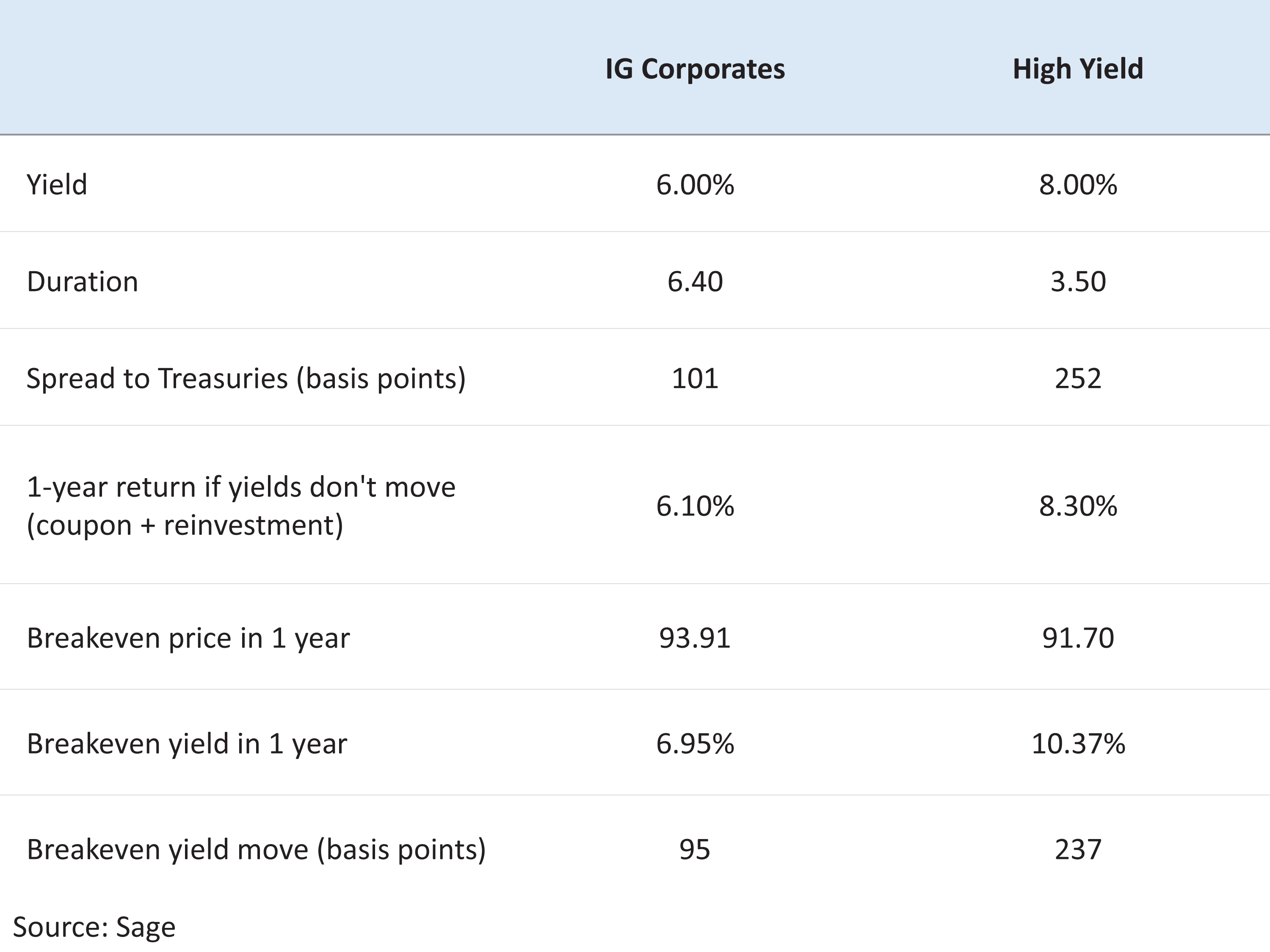
Income serves as the first line of defense against higher rates and wider spreads. The table below compares two hypothetical bonds. A 6% bond, with roughly the equivalent yield of an investment grade corporate bond today, can absorb about 95 basis points of higher yields over the next year before producing a zero total return. An 8% high-yield bond can withstand about 237 basis points. These simplified examples illustrate a reality that often gets lost during periods of rate volatility: higher starting yields improve fixed income’s resilience.
Income as a Shock Absorber
Credit spreads can widen, defaults can increase, and mark-to-market volatility remains elevated. But while the recent rise in yields may create short-term price pressure, it also reinforces the income-generating power now embedded in bond portfolios.