

The global competition for capital remains the key dynamic keeping yields elevated. Notably, all of the September increase in 10-year Treasury yields came from real yields, as implied by the TIPS market. Real yields are now approaching 3%, their highest level in this chart’s five-year history, while 10-year breakevens have barely moved from the 2.2% to 2.4% range that has prevailed for much of the past three years. Fiscal deficits remain large, while AI-related capital spending continues at a historic pace and appears less sensitive to higher borrowing costs than in prior cycles. Both compete for the same pool of global capital, and real yields are the price that clears that market.
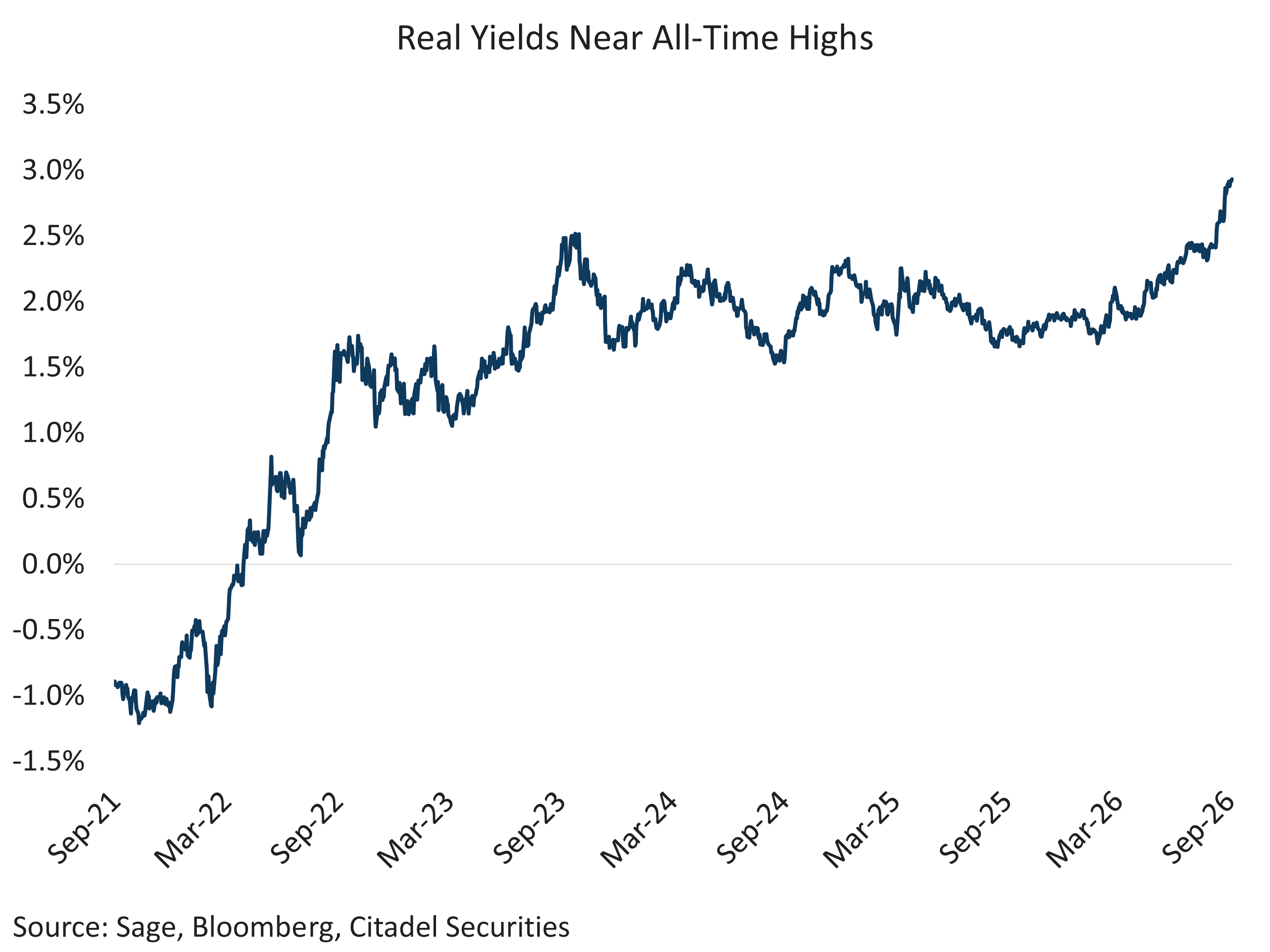
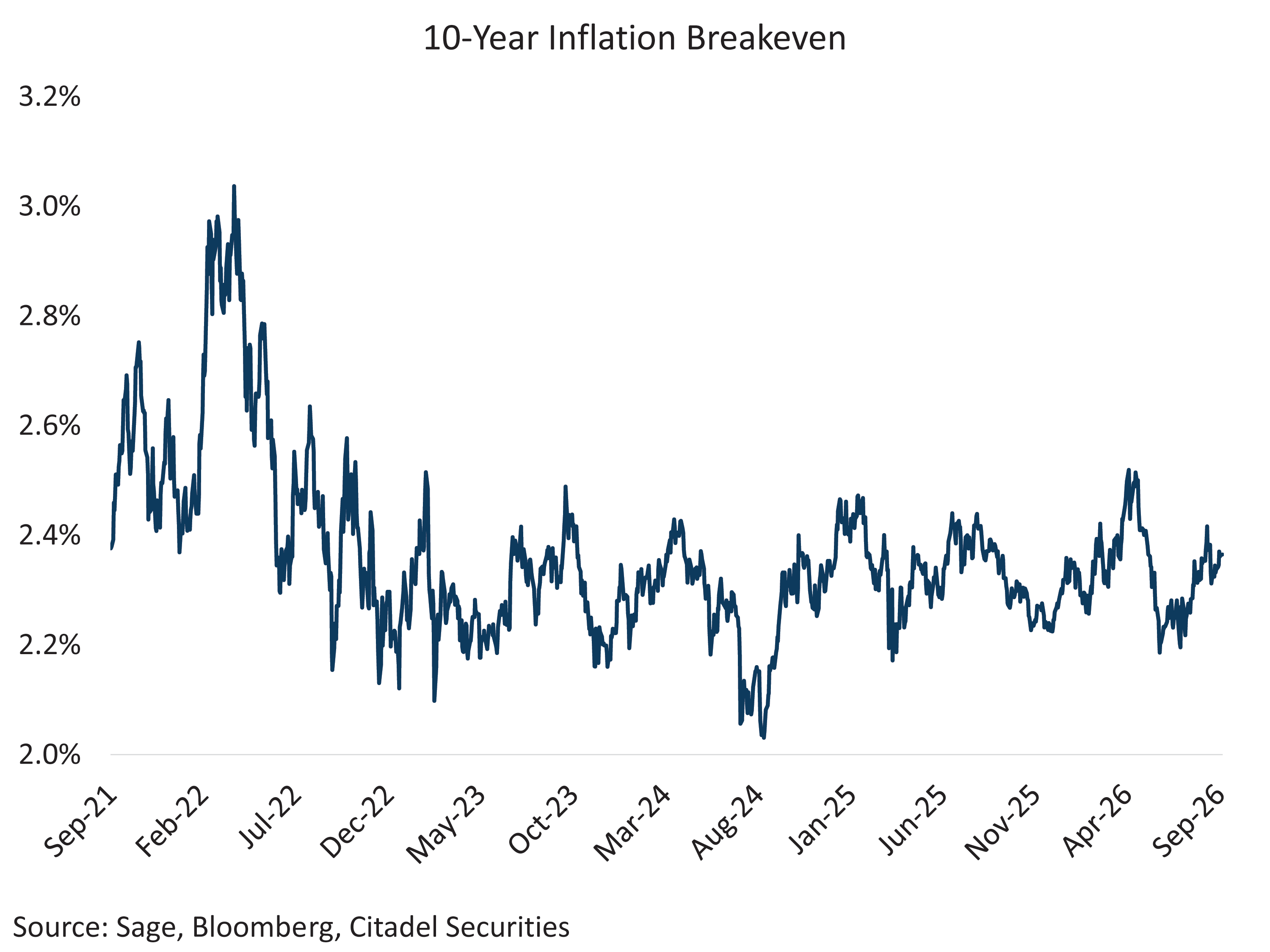
The Fed is no longer seen as behind the curve on inflation, reducing the urgency for further aggressive rate hikes. During the last hiking cycle, deeply negative real yields and elevated breakevens reflected a central bank that had fallen behind inflation. Today, anchored breakevens and real yields near 3% suggest markets largely trust the Fed’s commitment to price stability, a view echoed by policymakers in recent days. New York Fed President John Williams said the September hike means there is “no need for urgency” and that policymakers have “time to gather more information.” Vice Chair Philip Jefferson added that the Committee’s assessment of its next move “may take more time.”
On Friday, nonfarm payrolls rose just 29,000 in September, the unemployment rate edged up to 4.2%, and July and August were revised lower by a combined 60,000 jobs. Wage growth slowed to 3.0% year over year, its weakest annual pace since May 2021. With hiring slowing this much, there is little pressure on the Fed to move again in October. Markets currently reflect that view, with FOMC hike odds at roughly 20% for this month.
France’s recent yield move highlights the global nature of the competition for capital. The 10-year OAT yield has risen to roughly 4.9%, its highest level since 2008, as investors weigh a large fiscal deficit and record borrowing needs. Pressure within fixed income markets remains concentrated in sovereign debt, where the effects of heavy borrowing and rising debt-service costs are most apparent. Private sector balance sheets, by contrast, remain comparatively healthy. That distinction is evident in credit markets, where corporate spreads have stayed tight even as rates have moved higher.
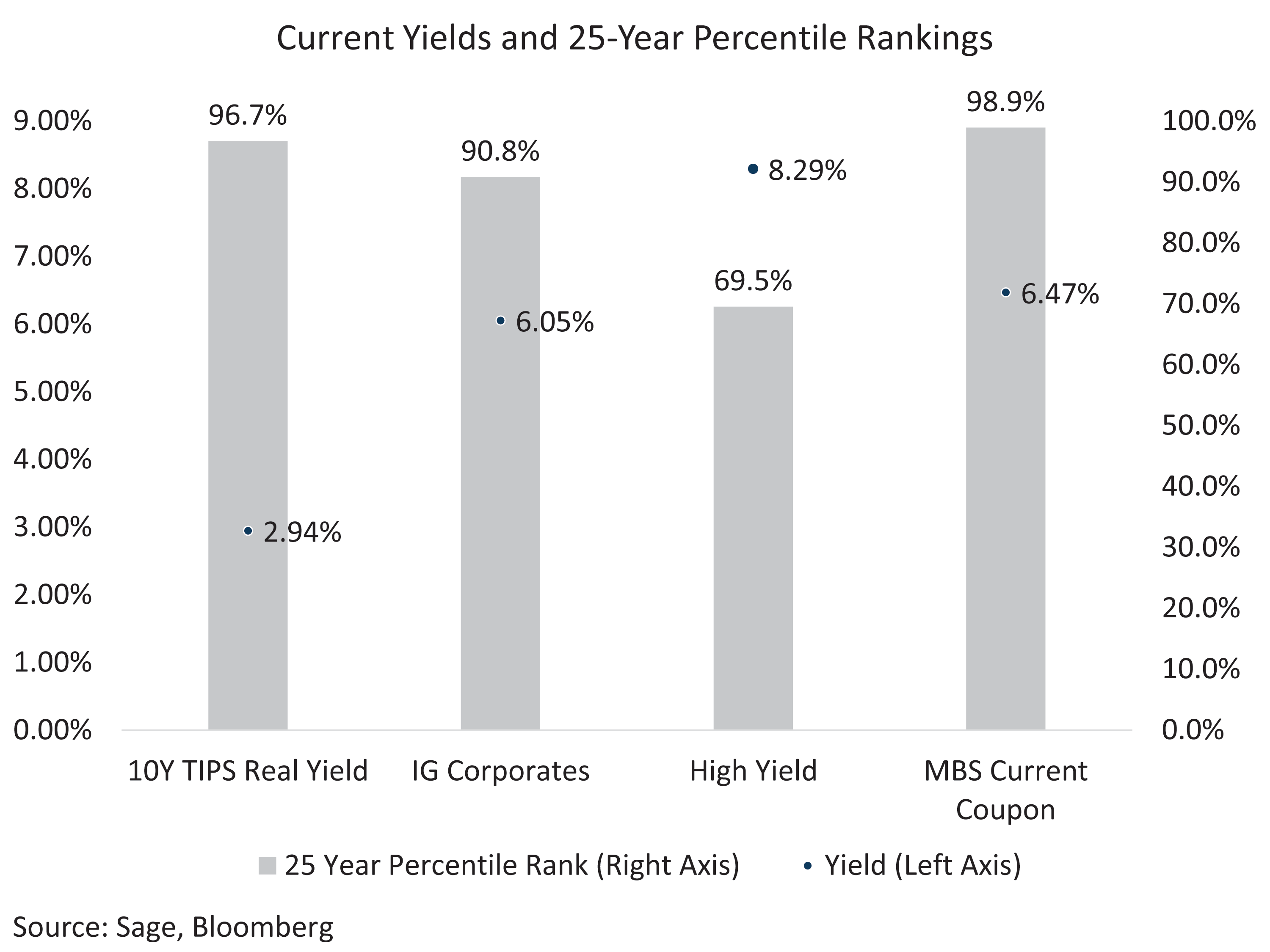
Fixed Income valuations have adjusted meaningfully over the past month. With all-in yields offering greater compensation and remaining near their highest levels in the past 25 years, demand for high-quality fixed income could stay firm. With the Fed no longer viewed as behind the curve, the path of yields into year-end will likely depend on incoming economic data.