

California’s combination of the nation’s largest population of high-income earners and the highest state income tax rate has created strong demand for in state, tax exempt municipal bonds. While California only bond portfolios are often expected to enhance after tax income by capturing the state tax exemption, market dynamics have frequently undermined this benefit. In practice, California municipal bonds often deliver lower after-tax yields than comparable national alternatives.
Why In State Bonds Often Trade at a Premium
In an efficient market, in state and out of state municipal bonds should offer comparable tax adjusted returns. However, several technical factors have driven California bond yields below the economic value implied by the state tax exemption.
Demand is fueled not only by California residents seeking tax efficiency, but also by passive mutual funds and ETFs that must replicate the municipal bond index. California represents approximately 17% of Municipal Broad Market Index — the largest allocation of any state. Because these vehicles are not valuation sensitive, they consistently purchase California bonds to maintain index weights, regardless of relative yield.
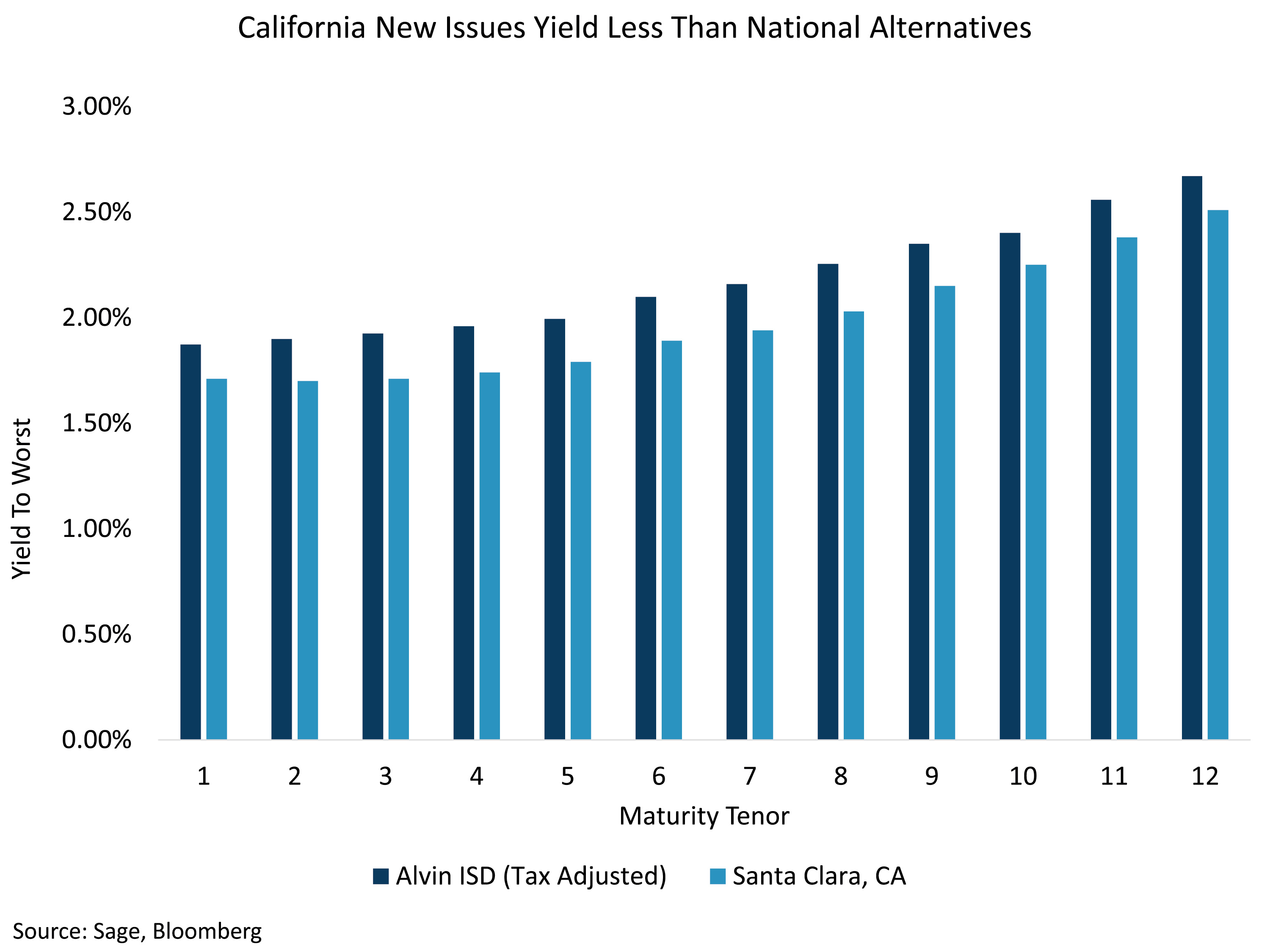
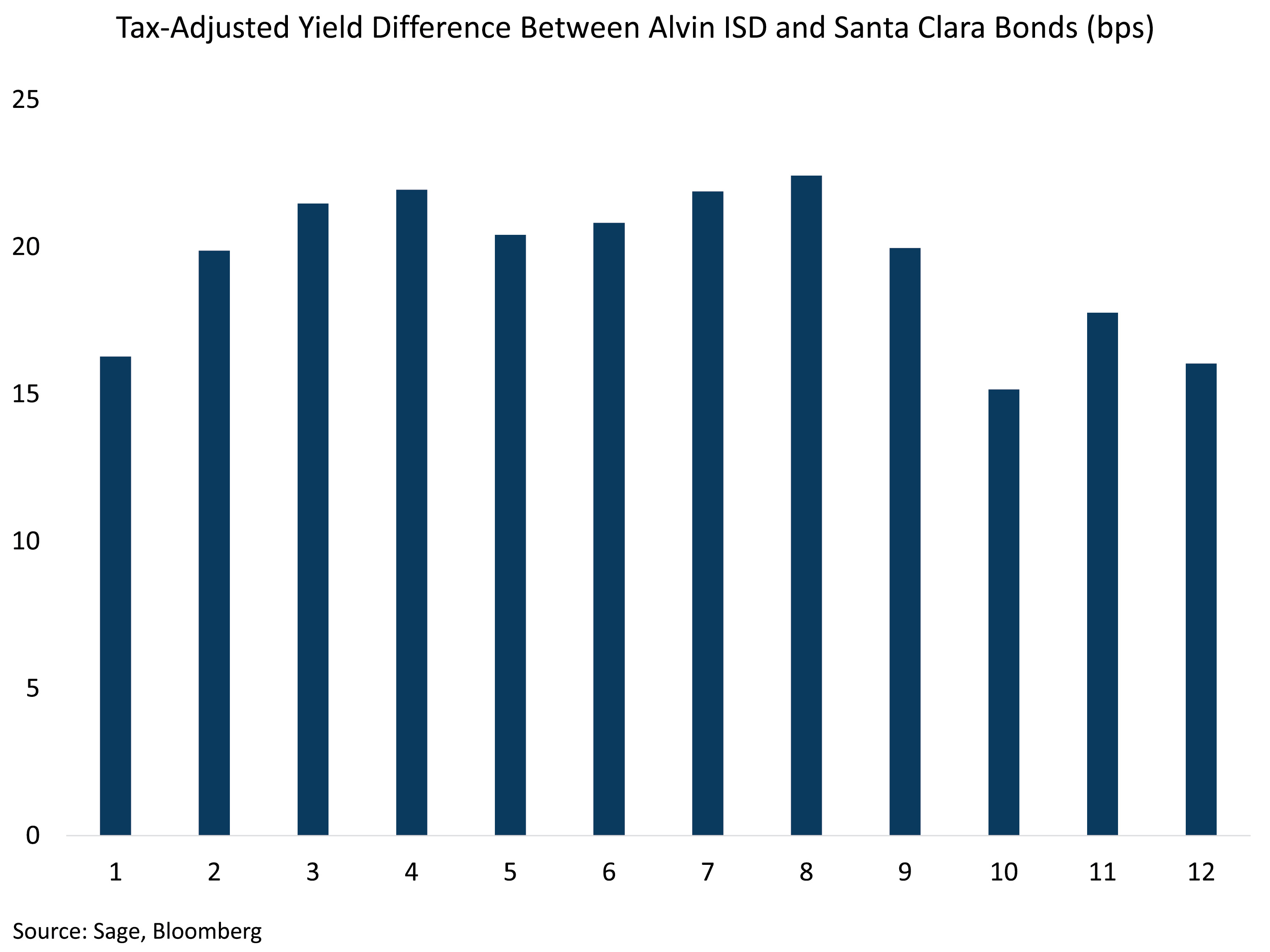
This dynamic was evident during the week of February 9, 2026, when a AAA rated Santa Clara, California issuance priced roughly 20 basis points below a AAA rated Texas school district bond, even after adjusting the Texas bonds for California state taxes. This was not an isolated occurrence. An analysis of nearly 1,400 California municipal bonds showed that California bonds yielded less than comparable national alternatives more than two thirds of the time.
More Efficient Alternatives
Many national municipal strategies out‑yield California‑only portfolios even after accounting for the state’s 13.3% top marginal tax rate. For investors who prefer some exposure to in‑state bonds, a California‑preferred approach — allocating roughly 50% to California issuers — can balance tax benefits with access to higher‑yielding out‑of‑state opportunities. This structure avoids forcing investors to purchase California bonds at levels that dilute the value of the state tax exemption.
Bottom Line
Although California‑specific municipal strategies are designed to enhance after‑tax income, technical market factors can erode — or eliminate — their expected advantage. Investors should consider national or state‑preferred approaches that may offer more efficient after‑tax returns.